
For load cell manufacturers and integrators serving OEMs

Give customers an earlier yes. Help them buy sooner.

Turn OEM requirements into automated preapproval and a preliminary 3D integration model built to their dimensions. Customers can check the fit while sales prepares the quote and engineering reviews the analysis for full approval.

Preliminary assessment. Final technical approval stays with your team.

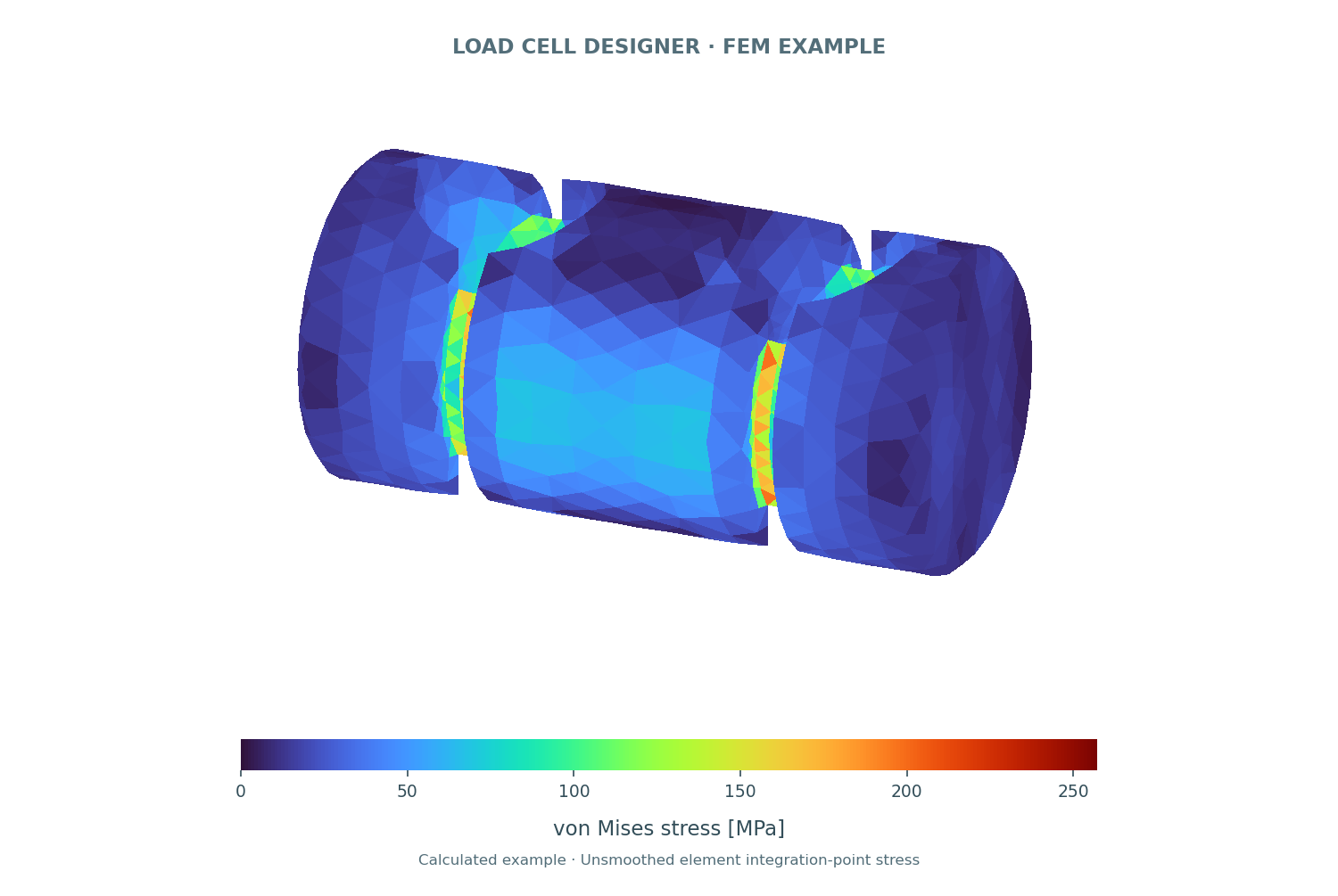
LOAD PIN / VON MISES ANALYSISFEM example
Von Mises FEM field on a pin generated by Load Cell Designer, with sensing pockets, circumferential grooves, key cuts and chamfered ends; stress scale in MPa
Generated and calculated with Load Cell Designer · Example, not an approved design. View analysis
01 / INPUTOEM requirements
02 / ASSESSPreliminary concept
03 / HANDOFFEngineering review

Earlier feasibility. Parallel quoting. Better-informed buying decisions.

Your expertise, at the centre of every design.

01 / FROM ENQUIRY TO PURCHASE

Help customers decide sooner.
Bring sales forward.

An early feasibility answer and a model sized to the installation give the customer something concrete to work with. Quoting can move forward without waiting for a manual first-concept review.

A typical enquiry today

Engineering effort before a buying decision

  1. 01
    Customer sends a proposalDimensions, load and application requirements.
  2. 02
    Sales forwards it to engineeringThe enquiry waits for a technical review.
  3. 03
    Engineering assesses feasibilityManual concept work before a sale is confirmed.
  4. 04
    Sales confirms feasibility to the customer
  5. 05
    Sales prepares and sends the quote
  6. 06
    Customer accepts or declines
  7. 07
    After acceptance: go to production.With the quote accepted and technical approval complete, release the design for manufacture.

Technical effort and several handoffs are already invested before the customer makes a purchasing decision.

With Load Cell Designer

An early answer. Three teams moving in parallel.

  1. 01
    Customer enters dimensions and requirements
  2. 02
    Automated preliminary preapproval“Your concept meets the configured feasibility criteria.” For qualifying designs, an integration 3D model and STEP are available. If the design is not preapproved, the result explains why, so the customer can check whether requirements can be revised and resubmit for assessment.
  3. 03
    In parallel
    CustomerUses the preliminary design for assembly fit and design validation.
    SalesPrepares and sends the quote using the captured requirements.
    EngineeringValidates the analysis report for full approval.
  4. 04
    Customer accepts or declines the quoteA concrete concept supports a better-informed decision.
  5. 05
    After acceptance: go to production.With the quote accepted and full technical approval complete, release the design for manufacture.

Reduce waiting and repeated handoffs. Give the customer a concrete concept while sales and engineering progress the quote and full approval together.

Not preapproved? Review the stated reasons, revise requirements where possible and resubmit. Cases that remain unresolved go to engineering for review.

Preapproval is an automated preliminary screening result within agreed criteria, not final technical approval. The integration model supports layout work; it is not a manufacturing drawing. Quoting and review responsibilities are agreed with the manufacturer.

02 / FROM QUESTIONNAIRE TO HANDOFF

An enquiry your engineers
can actually work with.

Explore the information flow below, then open the authenticated demo to try the calculation workflow.

Your OEM questionnaire

Start with the installation.

Capture rated load, support spans, pin envelope, connection and integration needs before exploring a geometry.

Mechanical inputs
Load cases · dimensions · supports
Application context
Installation · environment · connection
Open requirements
Visible for engineering follow-up

Illustrative workflow, not a live calculation or a validated load pin. Demo access requires an invited, verified email.

03 / YOUR ENGINEERING RULES

Your criteria define
the starting point.

Agree the engineering envelope during a pilot. Every preliminary outcome needs traceable inputs and a clear review boundary.

Load & safety

Agree rated load, overload cases and safety factors with your engineers.

Geometry & material

Define installation constraints, available materials and manufacturing limits.

Signal & integration

Agree target bridge output, connection requirements and customer deliverables.

Manufacturer-specific criteria are agreed and implemented in the engineering service. Branding this page does not change calculation limits.

04 / A FRONT END UNDER YOUR BRAND

Your customer relationship.
Your engineering expertise.

A white-label pilot can connect a branded customer entry point with your requirements and engineering handoff. Define the integration scope together.

Explore the manufacturer demo
Customer experience

Your name. Your language.

Adapt brand, terminology and the enquiry journey.

Engineering workflow

Your team stays in control.

Agree assessment criteria, review responsibilities and delivery routing.

Pilot → integration

Start with one load pin family.

Validate the handoff before expanding the workflow.

05 / MEASURE THE VALUE

Build the business case
from your own enquiries.

Compare a pilot with your current process. Measure the change before making claims about savings or return on investment.

01 / RESPONSE

Time to a useful answer

Track time from enquiry to preliminary preapproval, integration model and quote.

02 / EFFORT

Engineering time per enquiry

Compare technical effort before quote acceptance and the cost of enquiries that do not convert.

03 / QUALITY

Completeness of the handoff

Record missing inputs, clarification loops and designs requiring rework.

Pilot value = measured engineering time saved × your internal cost, weighed against setup, operation and review effort.

A LONGER-TERM OPPORTUNITY

Make your engineering know-how
easier for OEMs to access.

Start with a better enquiry. Over time, build a consistent path from customer requirements to your engineering team — with explicit criteria, structured data and a customer experience that belongs to you.

LET’S START WITH ONE APPLICATION

Bring your next custom load pin enquiry.

See the workflow. Review the handoff. Decide what a pilot should prove.

Explore the manufacturer demo